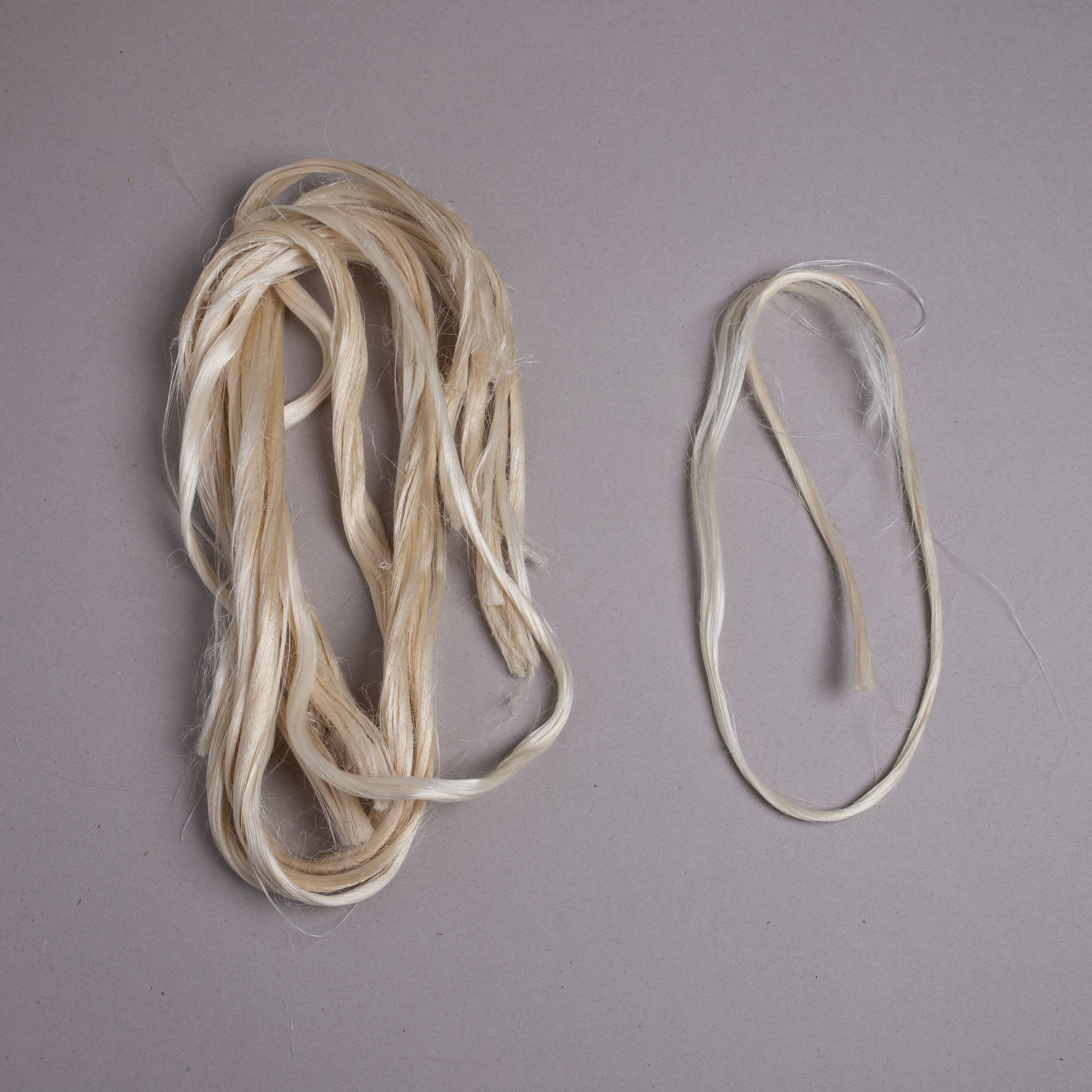
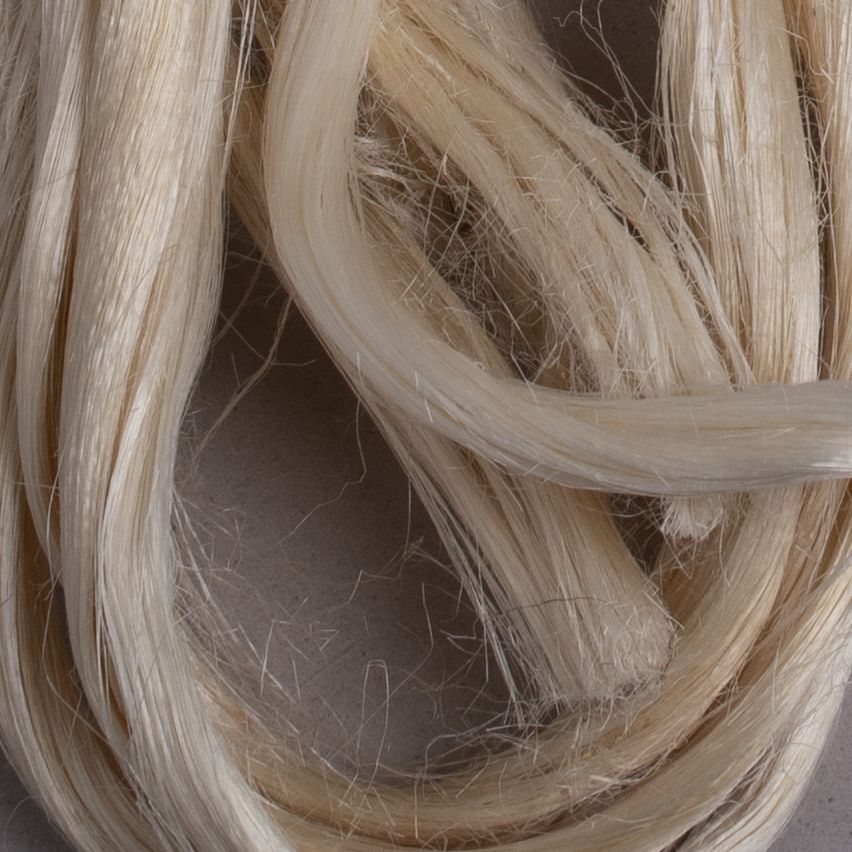
Pineapple fibre (pineapple leaf fibre, PALF) is a natural plant fibre obtained from the leaves of the pineapple plant (Ananas comosus). It is known for its fineness, sheen, and strength and is considered a traditional yet recently rediscovered eco-friendly material in the textile industry.
History and tradition
Origin and spread: Pineapple is native to Central and South America, but fibre use became highly developed in the Philippines from the 17th century, where it was used to produce luxury textiles known as piña. These fabrics were reserved for the upper classes and used for traditional garments (such as the barong tagalog), wedding dresses, scarves, blouses, table linens, and embroidery.
European demand: During the colonial period, piña textiles became highly valued export goods and were often presented as gifts to European aristocracy and royal courts.
Decline and revival: In the 20th century, cheaper cotton replaced them, but interest in pineapple fibre has increased again in the 21st century due to ecological trends and innovations in processing.
Fibre extraction process
Leaf harvesting: The fibre is obtained from pineapple leaves after fruit harvesting. The leaves are usually agricultural waste, so the process uses by-products.
Fibre extraction: Common methods include manual scraping, mechanical decortication, or retting to separate fibres from plant material.
Cleaning and drying: The extracted fibres are washed, sometimes bleached, and sun-dried.
Combing and spinning: Fibres are combed, manually twisted into yarns, and woven on simple looms.
Properties of pineapple fibre
Colour: Cream, white to ivory with a natural silk-like sheen
Fibre length: 60–80 cm (one of the longest plant fibres)
Diameter: 3–9 μm (elementary fibres), 35–170 μm (bundles)
Tensile strength: 37–993 MPa (varies depending on processing and leaf position)
Young’s modulus: 2.4–21.8 GPa
Elongation: 1–4%
Other properties: Very light, breathable, absorbent, moisture-resistant, antibacterial, biodegradable, and good dye affinity.
Textile applications
Clothing: Luxury, lightweight, and breathable fabrics for traditional and formal garments (piña textiles in the Philippines).
Accessories and home textiles: Scarves, tablecloths, curtains, cushions, bags, mats, embroidery.
Technical textiles: Reinforcements in composites, fillings, ropes, yarns, nonwoven textiles, paper, filters, and automotive or furniture padding.
Innovations: Often blended with cotton, viscose, or polyester to create eco-friendly fabrics, denim, and household textiles.
Interesting facts
Piña silk: Pineapple fibre yarns are often blended with silk (piña seda) or abacá (piña jusi) to increase strength and luxury appearance.
Eco aspect: Using leaves reduces agricultural waste and environmental impact; cultivation requires no heavy chemicals.
Handcraft tradition: Production is highly labour-intensive, making piña textiles luxury handmade products.
Show more