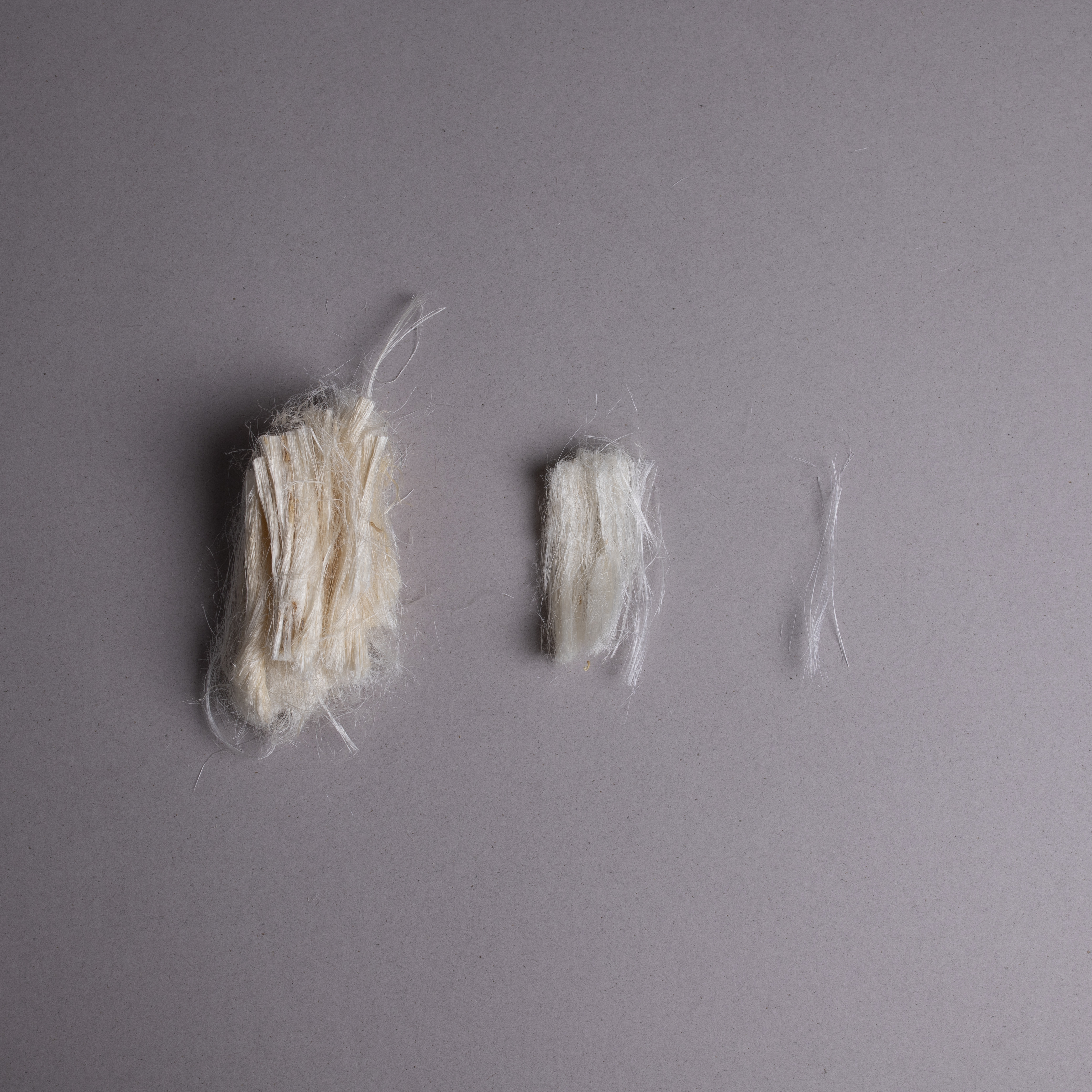
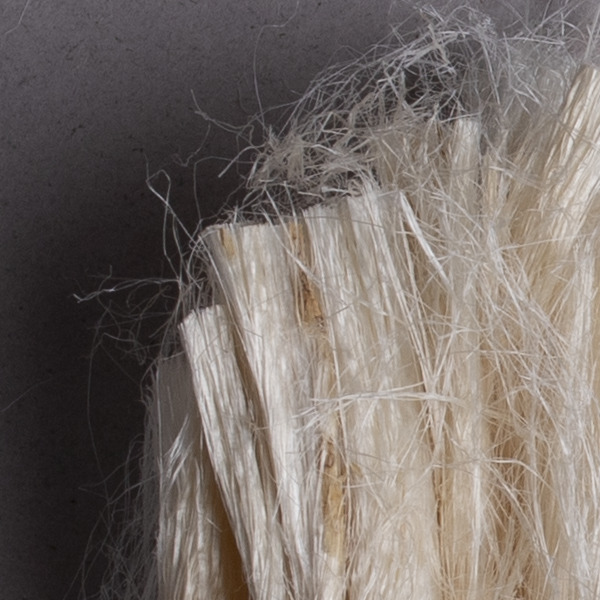
Banana fibre is a natural plant fibre obtained from the pseudostem (trunk-like stem) of the banana plant (Musa spp.). It is considered one of the most sustainable textile materials today.
History
The use of banana fibre has deep roots in Asia, especially in Japan and the Philippines, where banana plant textiles were already produced in the 13th century. In Japan, the traditional fabric bashōfu is an important part of Okinawan culture. In the Philippines, fine inner fibres were used to make luxurious textiles known as piña for traditional clothing, wedding dresses, and embroidery. In India and Southeast Asia, banana fibre was traditionally used for ropes, cords, baskets, and later for textiles.
Fibre extraction
Harvesting: After banana fruit harvesting, the pseudostem—which would otherwise be agricultural waste—is used for fibre production.
Extraction: Fibres are obtained mechanically (decortication), manually, or biologically (enzymatic processes). The finest fibres come from the inner layers of the pseudostem, which are soft and glossy, while outer layers are coarser and used for technical purposes.
Cleaning and treatment: Fibres are washed, cleaned, dried, and sometimes bleached (e.g., with hydrogen peroxide) to improve whiteness and softness.
Processing: The fibres are spun into yarn and woven into fabrics, similarly to flax or jute.
Properties of banana fibre
Strength: up to 15× stronger than cotton, 10× more durable than flax
Fibre length: 1,000–5,000 mm (1–5 m)
Diameter: 80–250 μm (depending on pseudostem layer)
Structure: Inner fibres are shiny and fine; outer fibres are coarser and stronger
Absorbency: High moisture absorption and quick drying, suitable for summer clothing
Durability: Resistant to water, heat, insects, and microorganisms
Eco-friendliness: Fully biodegradable; derived from agricultural waste; banana cultivation requires little pesticide and water use
Textile applications
Clothing: Shirts, dresses, sarees, suits, traditional garments (piña, bashōfu), scarves, blouses—often blended with cotton, silk, or synthetics.
Accessories: Bags, belts, hats, shoes, fashion accessories.
Home textiles: Curtains, tablecloths, cushions, carpets, mats, wallpapers.
Technical textiles: Ropes, nets, composite reinforcements, geotextiles, insulation and filtration materials.
Paper and packaging: High-quality paper, packaging materials, tea bags, banknotes.
Handicrafts: Baskets, decorations, and artistic products.
Medical and hygiene uses: Due to antibacterial properties, used in hygiene products, bandages, and masks.
Show more