Felted wool
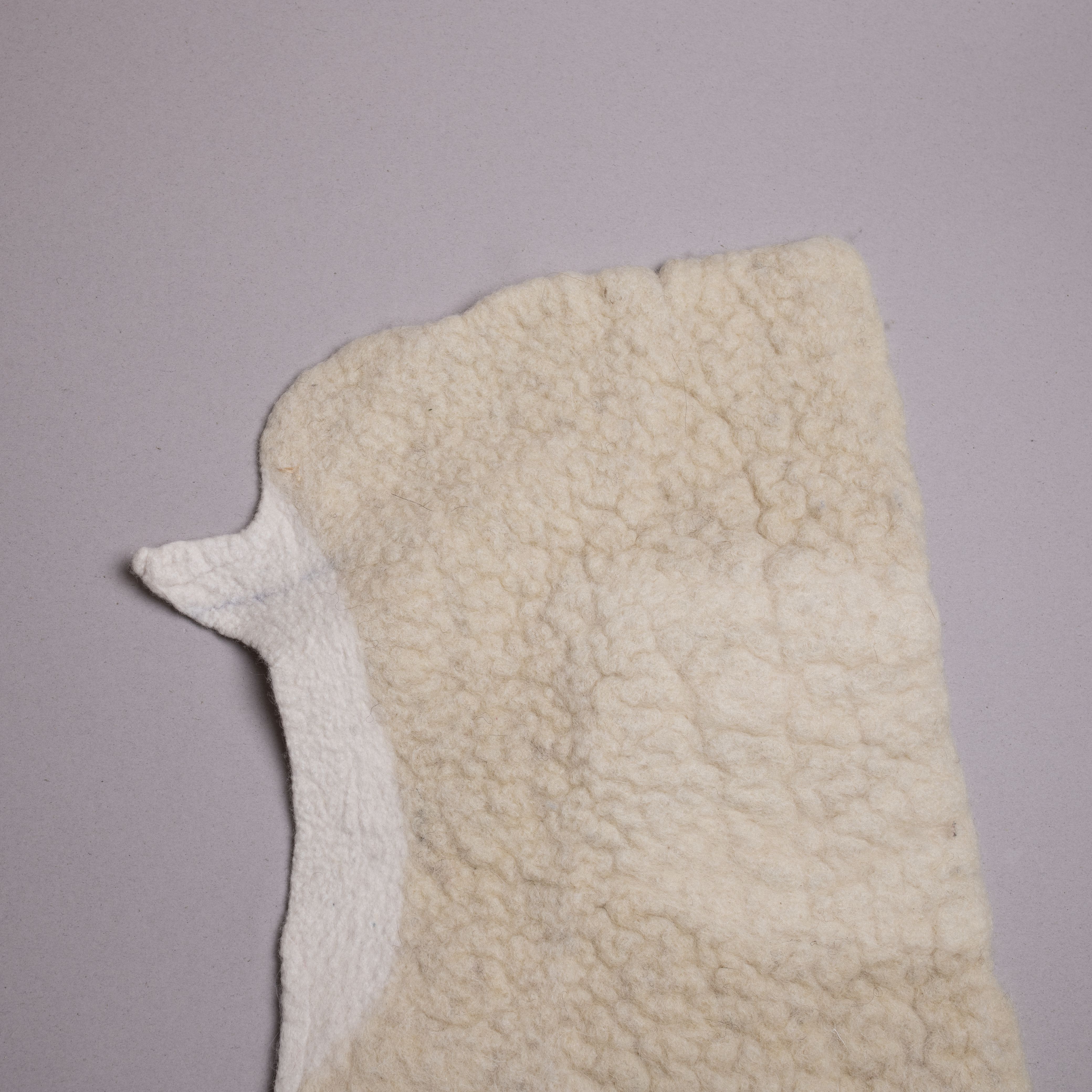
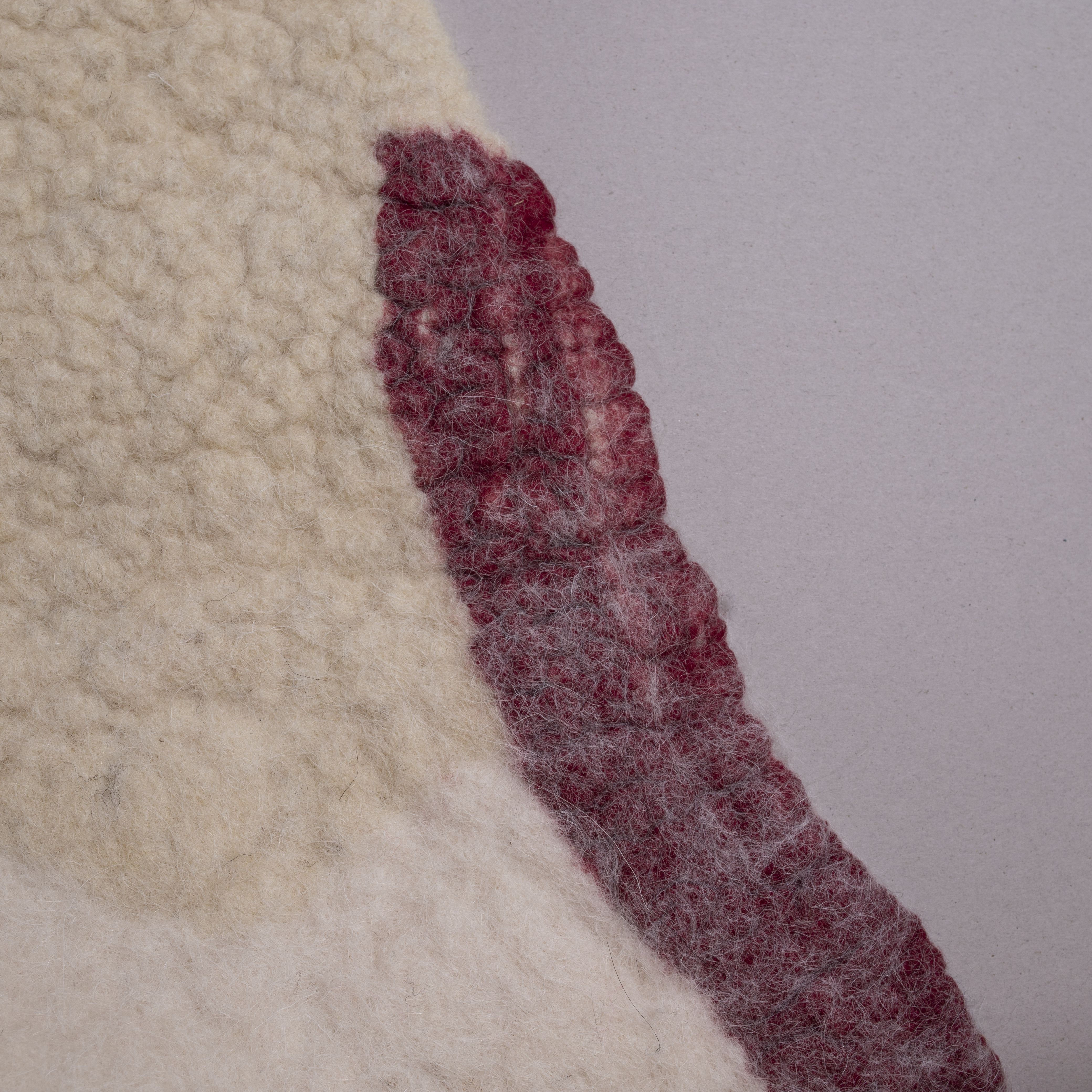
Felted wool is a traditional natural material made from sheep’s wool or other animal fibers through a process called felting, in which fibers that are aligned in various directions are bonded together by mechanical action, pressure, friction, and sometimes heat and moisture, forming a dense, cohesive structure. The history of felted wool dates back to prehistoric times—archaeological finds of felted materials have been discovered in ancient Asia and Great Moravia.
The production process involves cleaning, washing, and carding the wool. Felting can be done using two main methods: wet felting (where the wool is soaked in hot soapy water and shaped and compressed by hand, causing the fibers to interlock) or dry felting (where a special felting needle is used to tangle the fibers into a solid mass). The choice of wool significantly affects the final quality—merino, sheep wool, angora, and cashmere all differ in properties and applications.
Felted wool has excellent insulating properties, is breathable, elastic, relatively flame-resistant, and water-repellent. In the textile industry, it is used for hats, shoes, blankets, padding, carpets, decorative items, and artistic works. Felting remains both a popular craft and an industrial technique today, with an important place in textile history and culture.
Show more


.jpg)
.jpg)