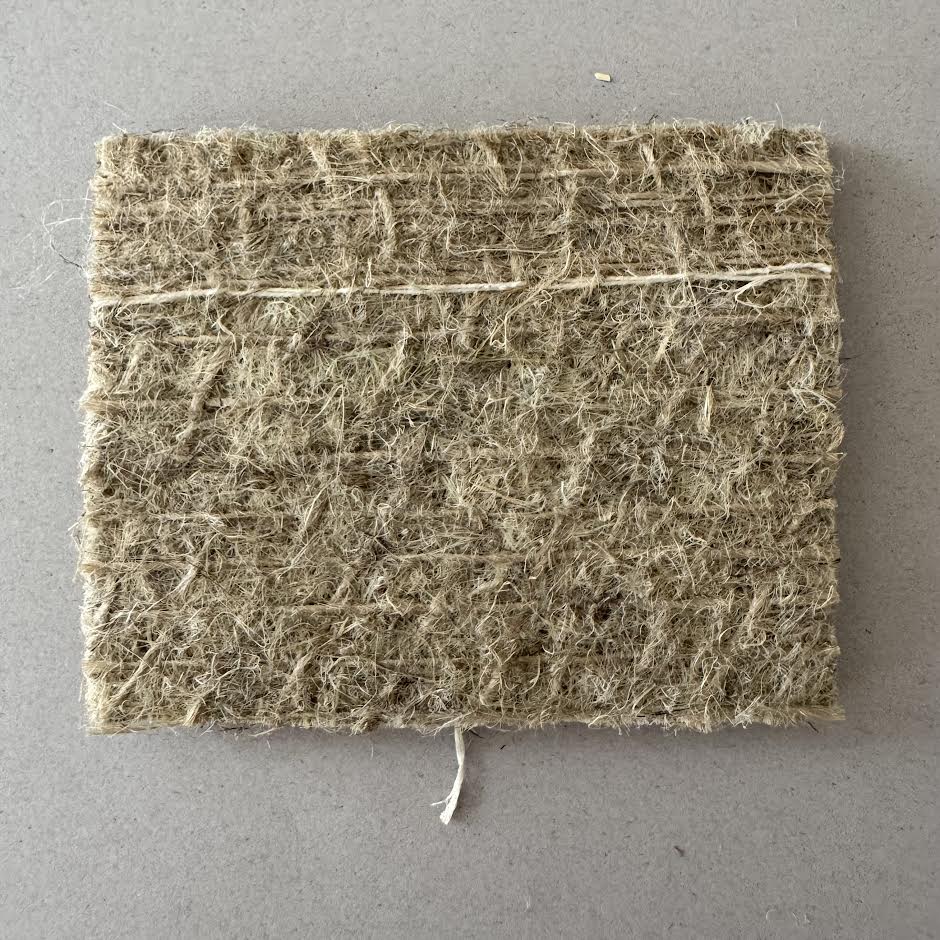
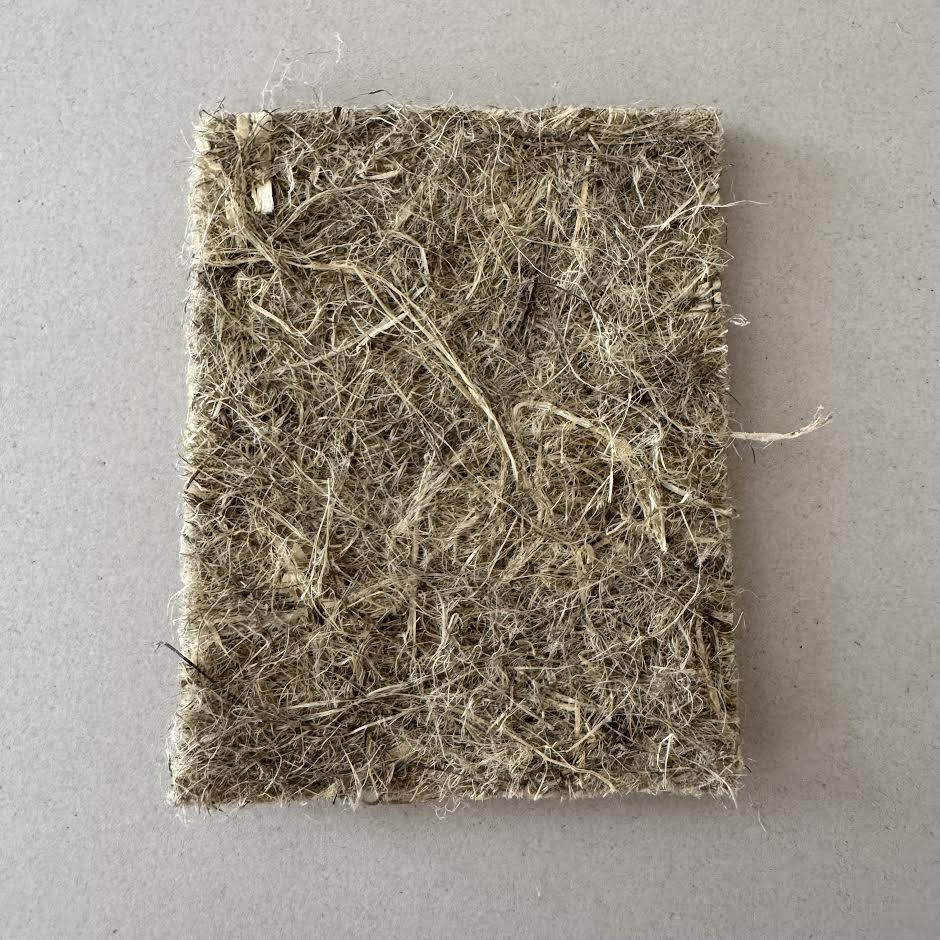
Hemp nonwoven composite
A nonwoven hemp composite is a modern ecological material created by combining disintegrated hemp biomass (mainly fibers and sometimes hurd) with natural or synthetic binders, which give it strength, stability, and specific functional properties. Its development began in the 20th century, when alternatives were sought to mineral wool, conventional plastics, and standard textiles; nonwoven hemp composites became an important response to the need for sustainable and recyclable materials.
Production uses nonwoven textile technology: the disintegrated hemp fibers are mixed with a binder (such as polyester or corn starch), spread into a uniform layer, formed into sheets or strips, and then consolidated under heat and pressure to achieve the desired shape, structure, and thickness. The resulting material is lightweight, porous, thermally insulating, sound-absorbing, and resistant to pests and mold.
In the textile industry, nonwoven hemp composites are used as filling materials (in mattresses, furniture, and automotive interiors), for technical and insulating nonwoven fabrics, protective packaging, and also in eco-design and construction applications. The material is recyclable and environmentally friendly, making it one of the most promising sustainable textile innovations today.
Show more