sprang
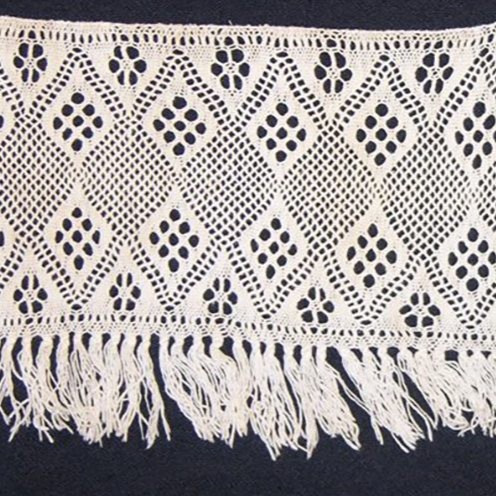
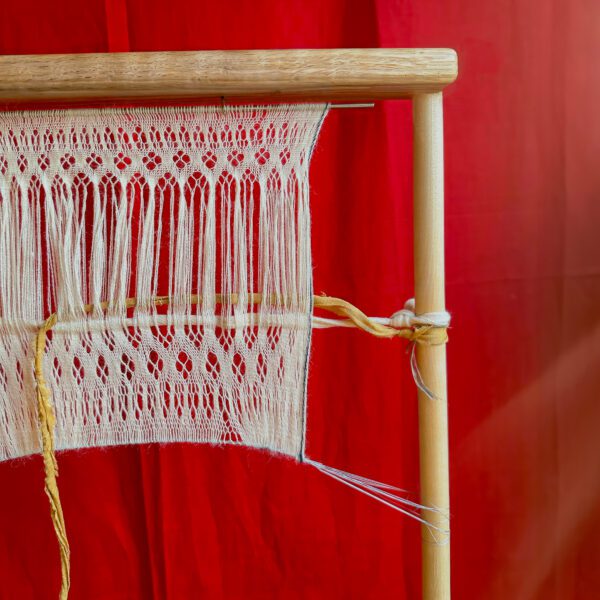
Frame Knitting (also known as sprang or sprang weaving) is an ancient textile technique in which an elastic fabric structure is created by interlacing tensioned warp threads stretched on a simple frame. This method was historically used to produce caps, belts, bags, hairnets, and decorative textile elements, and archaeological evidence confirms its use since prehistoric times. The technique involves creating a textile by twisting and crossing parallel threads, or groups of threads, stretched vertically on a frame known as a sprang frame. The Slovak term krosienka is derived from this frame and gives its name to the technique (frame knitting or sprang). Unlike weaving, no weft thread is inserted; instead, the textile structure is formed entirely through the manipulation of the warp threads. Textiles produced using sprang were highly elastic and flexible. When used as garments, particularly head coverings, they adapted closely to the shape of the body, providing both comfort and functionality. Due to its unique structure and visual appearance, sprang occupies an important place in the history of textile production and is considered one of the earliest known methods of creating elastic fabrics.
Show more