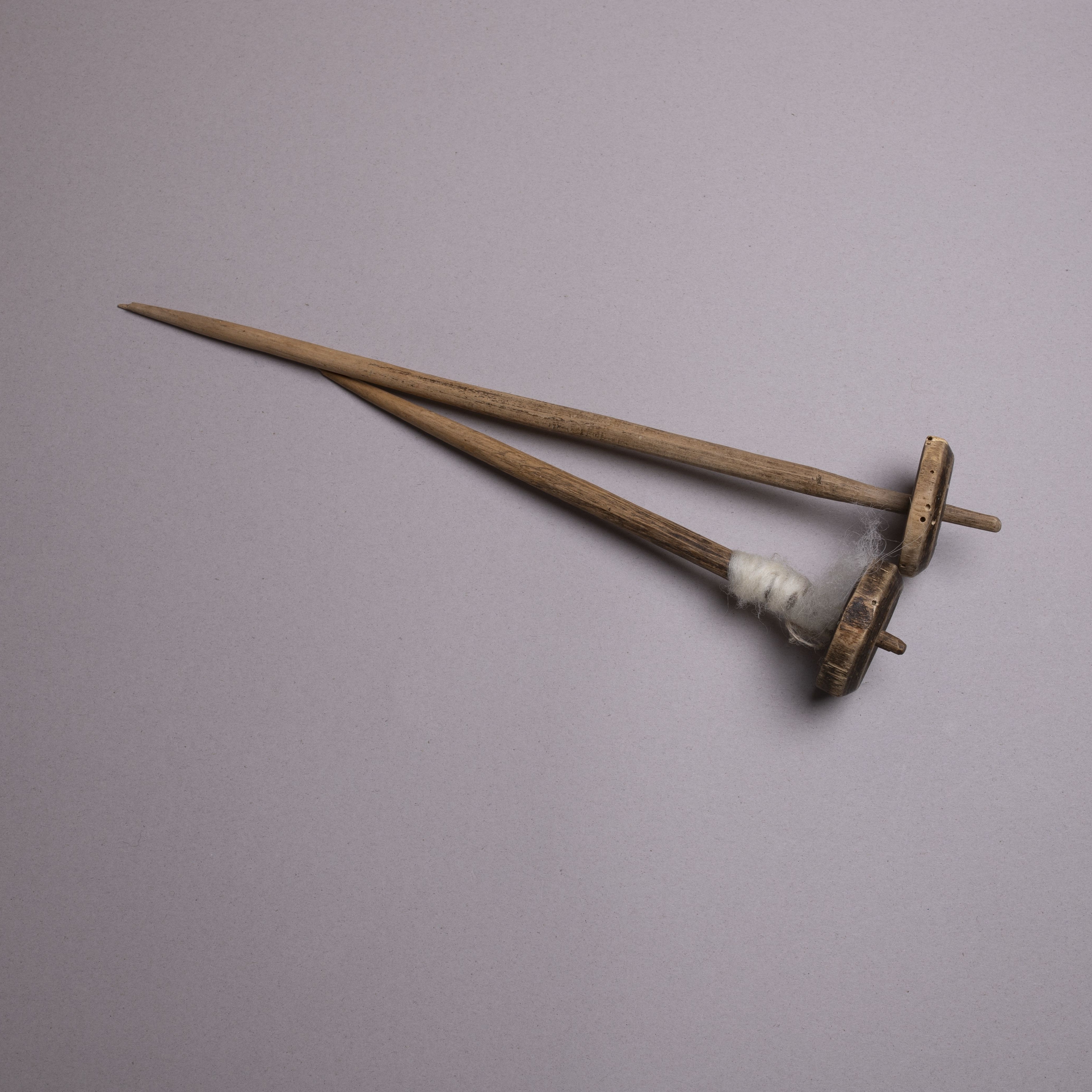
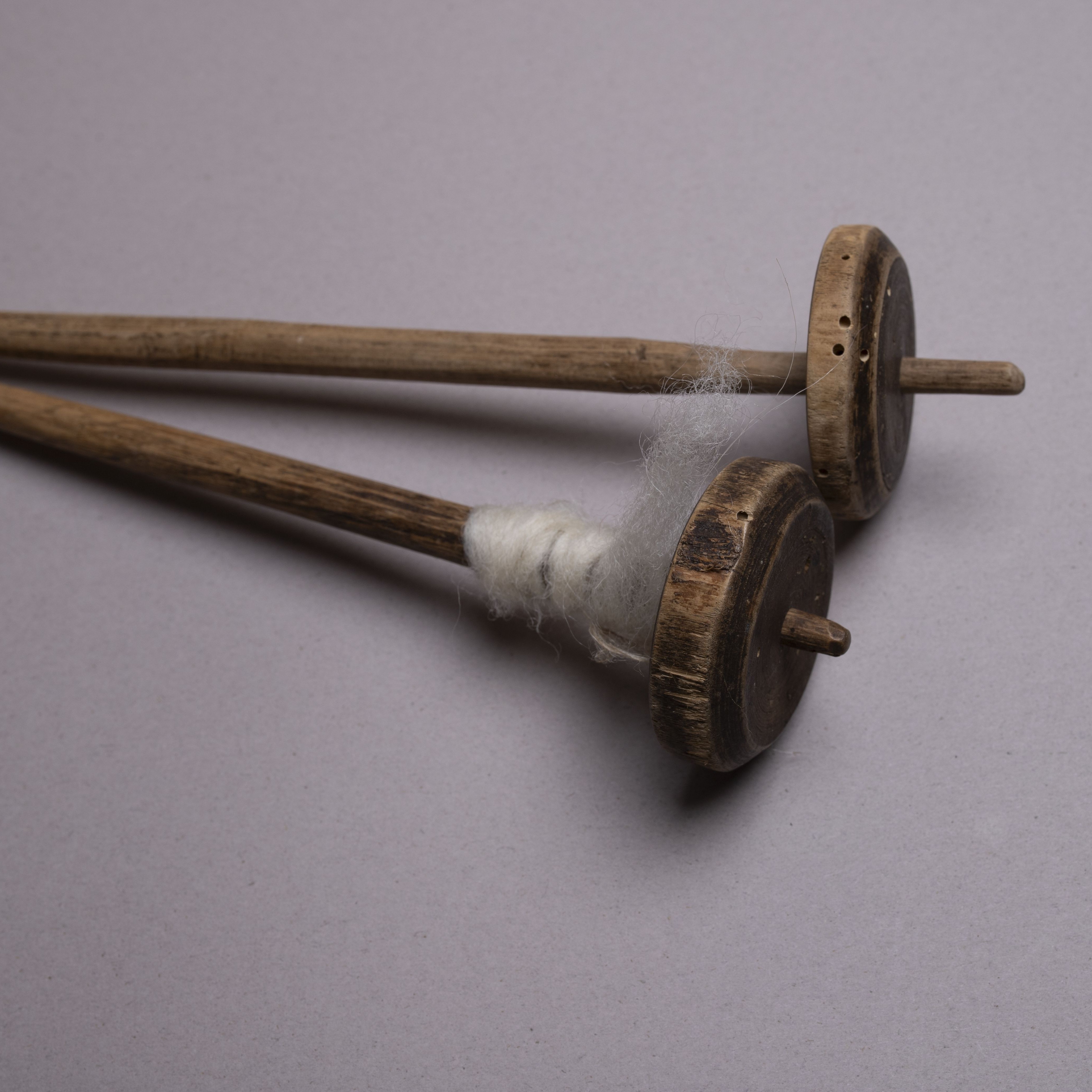
spindle
Tool for twisting fibers into thread. It consisted of a drum and usually a removable or fixed weight with the drum, thanks to which it was possible to spin faster and faster. The weight in the shape of a wheel or a truncated double cone was placed on the drum from below or above at the beginning of spinning, when the spindle was light (there was little yarn on it). In Slovakia, spindles with a whorl, in the form of a clay, stone double-conical wheel, were used already in the Neolithic. From about the middle of the 18th century, cast spindles with a wooden wheel firmly connected to the drum began to be used. In the first half of the 20th century, spindles with a thick stem were still used (in the vicinity of Považská Bystrica and Púchov, they were hand-grated, without weights, about 40-50 cm long; in Spiš, in the adjacent villages of Liptov, and in northern Gemer, they were turned, up to 35 cm long). Horseshoes - weights used for turned spindles, were cast in lead, less often in brass. A small potato, stuck onto the spindle from below, also served as a horse's hoof. At some point, the spindle was also considered a magical remedy.
Show more