Goat hair
Goats were domesticated animals in the territory of Slovakia, and although there are no archaeological finds confirming their textile use, historical and ethnological sources suggest that goat hair was likely also used for textile production. Likewise, goat breeds such as the Angora goat (mohair) and the Cashmere goat, whose fibres are highly valued in the textile industry, were not historically documented in Slovakia.
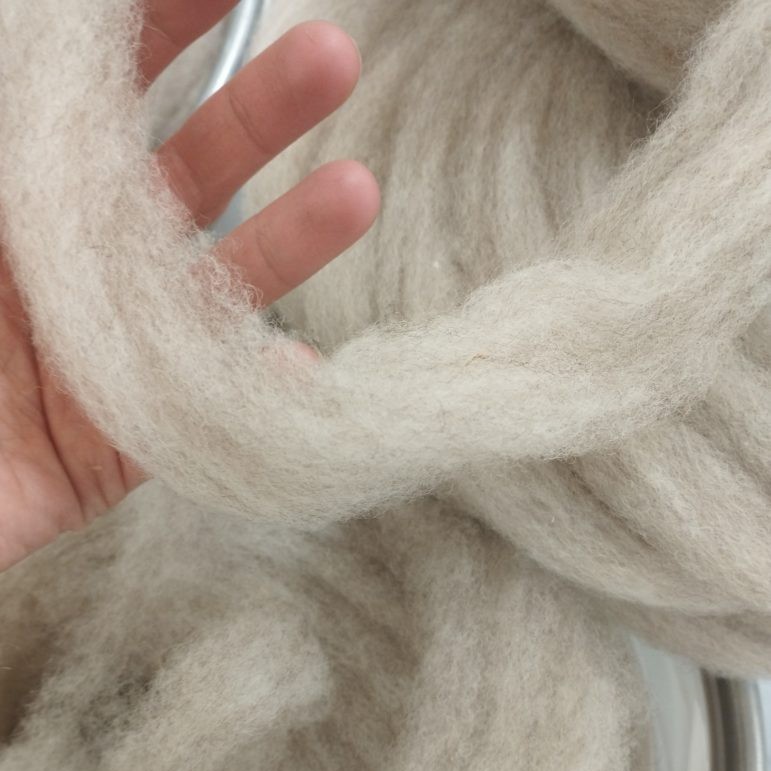
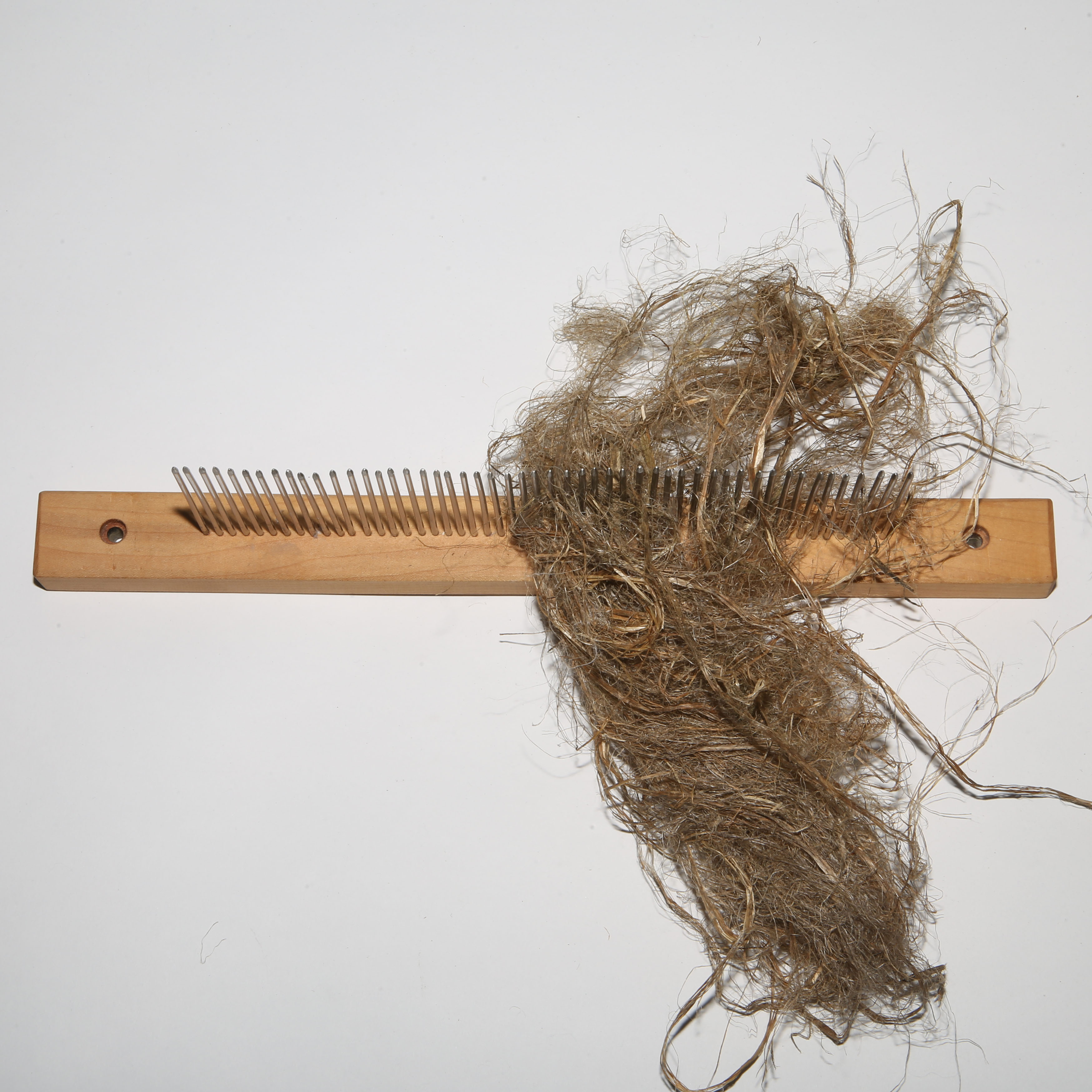
Goat hair was obtained mainly by purchasing it from slaughterhouses and was used mostly as an additive to sheep wool. It was processed into wool by teasing (opening and separating the fibres). In traditional cloth and coarse woolen fabric production, goat hair was mixed with wool. Fabrics made from sheep wool with added goat hair were highly resistant to rain. However, it was not added to fine-quality cloth, because it did not felt well and tended to work its way out of the fabric.
Goat hair consists of three basic components:
coarse guard hairs: stiff fibres that determine the volume and structure of the coat,
transitional hairs: thinner than guard hairs, forming a bridge between coarse and fine fibres,
short, soft hairs: fine, thin, often slightly wavy fibres that are the most valuable for textile processing.
Properties:
Colour: white, cream, brown, black
Fibre length: 3–15 cm
Fibre fineness: 12–40 µm
Excellent thermal insulation properties, protecting against both cold and overheating
Ability to absorb and quickly release moisture, helping to maintain warmth even when wet
Softness, elasticity, and long product lifespan
Uses include clothing production, accessories, and also specialised brushes.
Show more


.jpg)
.jpg)