ePrivacy and GPDR Cookie Consent by TermsFeed Generator

melt spinning

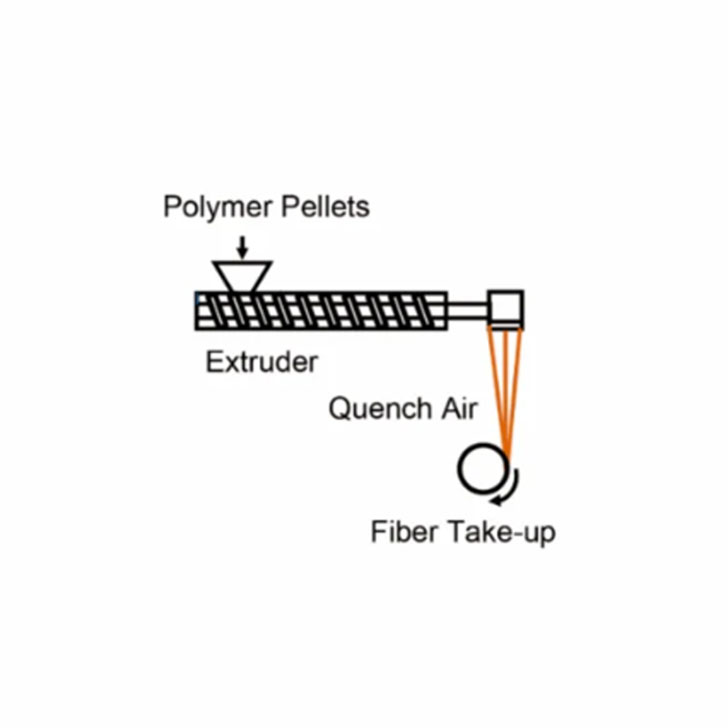
Melt spinning is the most widely used and highly efficient method of producing synthetic fibers, especially from thermoplastic polymers such as polyester, nylon (polyamide) and polypropylene. It is the basic method in the textile industry for producing continuous filament fibers. Process flow. Polymer melt and thus polymer granules or flakes are fed into an extruder, where they are heated and melted to a suitable viscosity. The molten polymer is filtered and dosed under pressure into a spinning nozzle (spinneret). Spinning through the nozzle: The melt is extruded through fine holes in the nozzle, creating continuous fibers. Cooling and solidification: After leaving the nozzle, the fibers pass through cold air (so-called quench chamber), where they quickly solidify. Drawing and winding: The solidified fibers are stretched (which improves their strength properties) and wound onto bobbins for further processing. Polyester, nylon, PP
Show more

Gallery

About the technology

Technologies / Tools / Machines industrial technology
Text source

Organizations Show more

Organization name Detail

Materials

  • Milk protein

    Milk protein, especially casein, is used to produce so-called milk fibre (casein fibre), which belongs to regenerated protein fibres. This fibre is...

    Read more

Táto fáza projektu Knižnica lokálnych textilných materiálov bola podporená Fondom na podporu umenia.
This phase of the project Library of Local Textile Materials was supported by the Slovak Arts Council.

Let's start working together

Whether you're a designer, manufacturer, or company, we help you innovate and create more sustainable products.

Sign up

You are contacting us:

The product has been successfully added to the shopping cart

Login