spinning machine
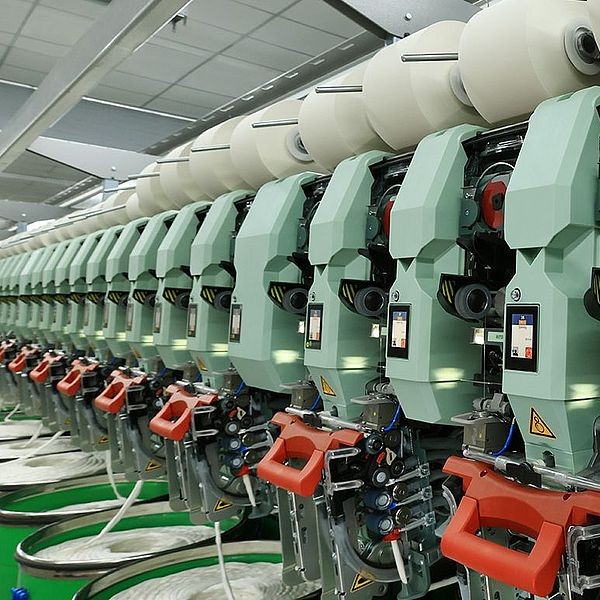
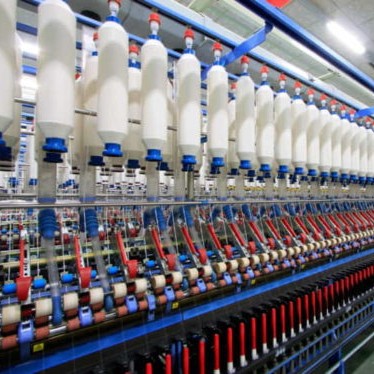
A spinning machine is a mechanical textile device designed for the production of yarn from loose fibers. Its primary function is to draw, align, twist, and wind fibers into a continuous thread suitable for weaving, knitting, sewing, or other textile processes. The introduction of spinning machinery represented a major technological shift from manual textile production to industrial manufacturing, significantly increasing production speed, uniformity, and material efficiency. Spinning machines can process a wide range of natural, regenerated, and synthetic fibers, including wool, flax, hemp, cotton, silk, viscose, and polyester. These are the most common types : Ring spinning – a spinning technology in which fibers are twisted using a spindle, ring, and traveler system, producing strong and fine yarn with high structural quality.
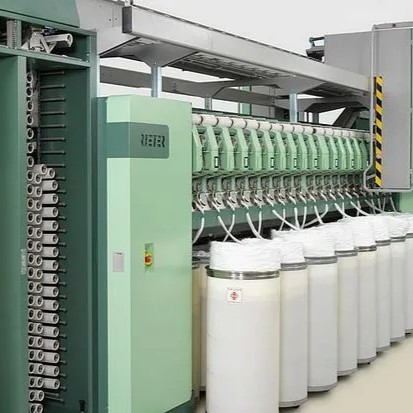
Rotor spinning (open-end spinning) – a spinning method that uses a rapidly rotating rotor, where fibers are joined by centrifugal force into yarn suitable for high-speed production.
Air-jet spinning – a modern spinning technology in which fibers are bound and twisted using streams of compressed air, enabling fast and energy-efficient yarn production.
The structure and operation of spinning machines vary according to the technological principle used for yarn formation. Among the most significant types are spindle spinning machines, flyer spinning frames, ring spinning machines, mule spinning machines, rotor (open-end) spinning machines, and air-jet spinning machines.
Spindle spinning machines represent one of the earliest mechanized forms of spinning technology and are based on the rotational movement of a spindle that twists fibers into yarn. Flyer spinning frames use a rotating flyer mechanism to guide and wind yarn evenly onto bobbins and were commonly used in the processing of flax and wool. Mule spinning machines, developed during the Industrial Revolution, combined the principles of roller drafting and spindle spinning, enabling the production of fine and high-quality yarns.
Ring spinning machines became the dominant industrial spinning technology from the 19th century onward. In this system, yarn is continuously twisted and wound through the interaction of a spindle, ring, and traveler mechanism, producing strong and durable yarns suitable for a broad range of textiles. Rotor or open-end spinning machines utilize centrifugal force within a rapidly rotating rotor to form yarn at high speeds, making them suitable for mass production. Air-jet spinning machines represent a contemporary technology in which compressed air streams bind fibers together, enabling highly automated and energy-efficient yarn production.
Show more


.jpg)