industrial knitting
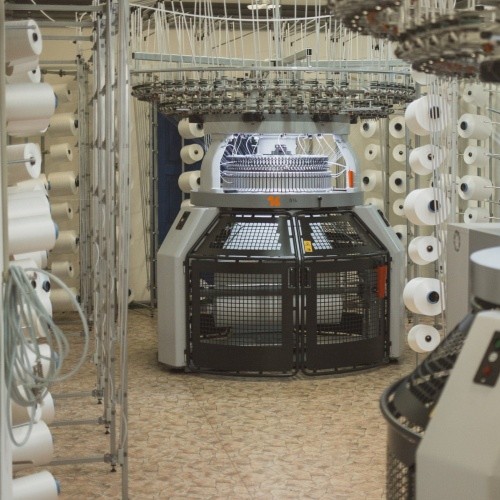
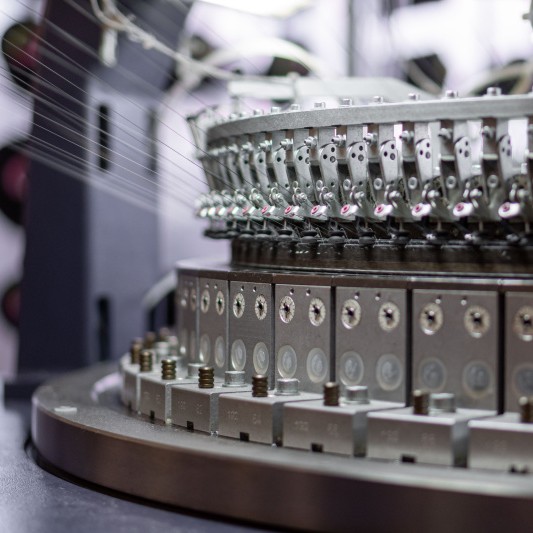
Industrial knitting is a technological process of producing flat textile structures (knitted fabrics) by interweaving yarns into loops using specialized knitting machines. Knitted fabrics are the basic material for the production of a wide range of clothing and technical textiles, and are characterized by high elasticity, breathability, adaptability and good thermal insulation ability
Basic principles and types of industrial knitting
Knitted fabric is created by creating loops from one or more yarns, which are subsequently interwoven with each other. This creates different types of knitted fabrics with different properties depending on the interweaving method and the technology used
Types of industrial knitting:
Weft knitting: Loops are created from a single yarn that is bent horizontally and interwoven. This type of knitted fabric can be torn, which facilitates repairs and modifications of products. A typical example is the production of knitwear on flat or circular knitting machines
Warp knitting: The stitches are created from several yarns at once, with each yarn creating stitches in the warp direction (along the length of the fabric). Warp knitted fabrics are characterized by higher strength and cannot be torn. They are mainly produced on warp knitting machines and are used, for example, for technical textiles or underwear
Properties and uses of knitted fabrics
Knitted fabrics are flexible, stretchable, breathable, adaptable, non-shrinking and have good thermal insulation properties.
They are used to produce sportswear, casual wear, formal wear, as well as technical textiles (e.g. medical, automotive or protective textiles)
Industrial knitting is one of the most dynamic and versatile technologies in the current textile industry. Modern knitting machines enable fast, efficient and flexible production of a wide range of textiles – from regular clothing to special technical textiles.
Clothing industry: Knitwear is the basis for the production of T-shirts, underwear, socks, sports and functional clothing. Thanks to their flexibility, breathability and comfort, knitwear has a dominant position in the clothing segment. Modern technologies enable the production of seamless clothing and 3D knitwear, which minimize waste and increase wearing comfort
Technical knitwear
Knitting is also used to produce technical textiles – for example, for the automotive industry (covers, airbags), medical devices (bandages, compression stockings), protective clothing or construction and agricultural textiles. Warp knits excel in strength and stability, which is important for technical applications
Innovative design and individualization:
Modern computer-controlled knitting machines allow for rapid changes in patterns, structures and shapes of knits according to designers' requirements. Examples include the connections: Digital technologies and AI: Artificial intelligence today makes it possible to analyze customer preferences, predict fashion trends and quickly adapt collections to current demand. Platforms such as Stitch Fix or Zalora use algorithms to predict purchasing behavior, saving time, materials and resources. On-demand personalization:
Digital printing, 3D sampling and automation enable the production of tailor-made garments according to individual customer requirements. On-demand customization changes the model from mass production to personalized fashion, reducing waste and promoting sustainability. Innovative production concepts: An example is Issey Miyake's A-POC (A Piece of Clothing) concept, where the garment is created as a continuous piece of fabric with pre-made seams. The customer can simply cut out individual parts according to their own needs, thus combining mass production with the possibility of self-customization and minimizing textile waste. Innovative production concepts: An example is Issey Miyake's A-POC (A Piece of Clothing) concept, where the garment is created as a continuous piece of fabric with pre-made seams. The customer can simply cut out individual parts according to their own needs, thus combining mass production with the possibility of self-customization and minimizing textile waste..
Show more