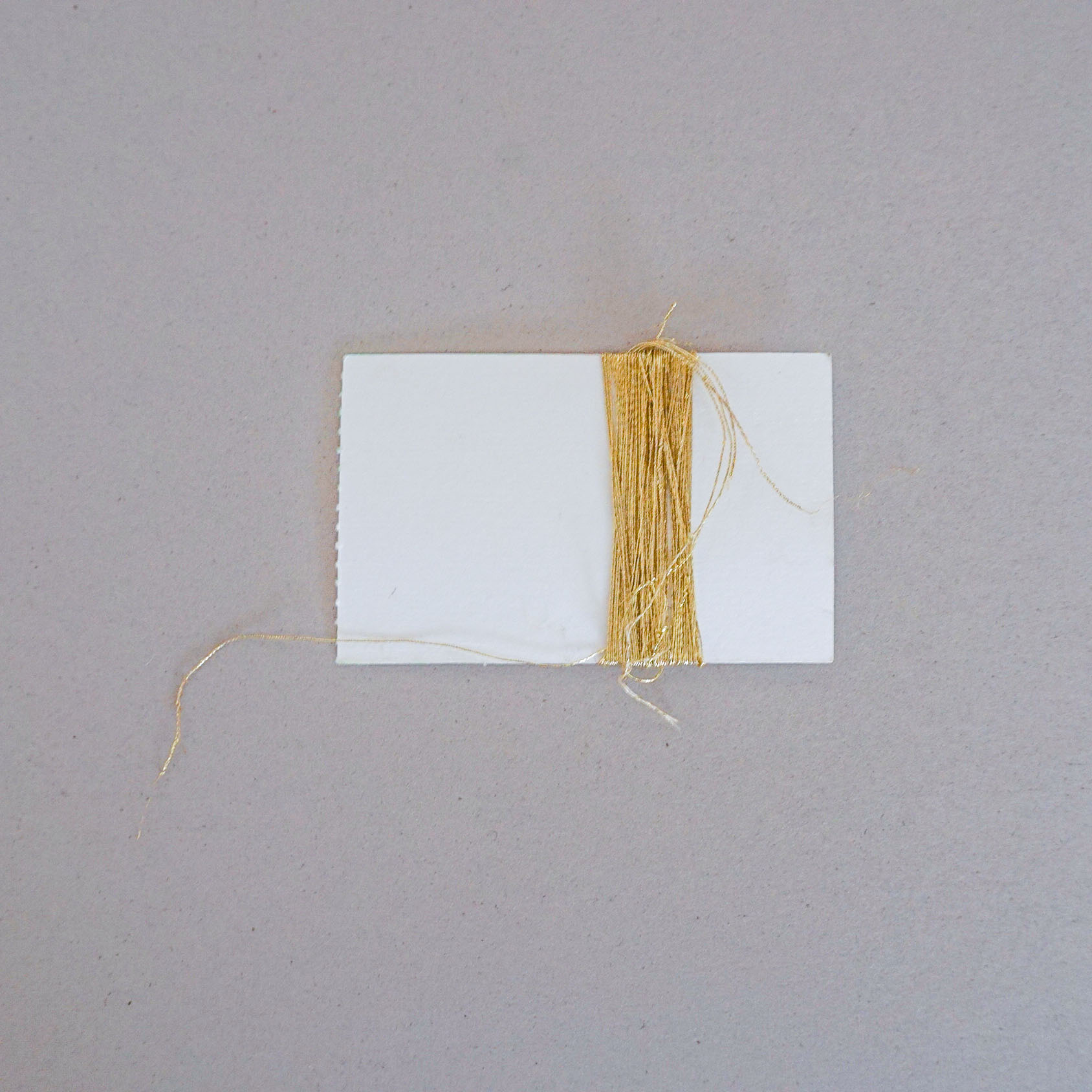
Metal threads
Metal threads were used in Slovakia within folk art, especially for decorating traditional folk costumes (kroje), but also other garments and textiles. Well-known is the production of metallic threads in Bratislava, where Kühlmayer’s factory for gold threads was established in 1868.
In the past, these metal threads were produced manually by rolling and spinning precious metals. Inside the thicker cords there was often a cotton yarn core, which provided structure and reduced the amount of expensive metal needed.
To save material, metallic threads were often attached on the reverse side of embroidery using ordinary sewing threads (cverny).
Metal threads were also used to produce “šujtáš” cords, which were applied for decorating clothing, uniforms, flags, curtains, and various other objects.
Embroidery made with gold or silver metal thread, or with fine spiral metal threads called bouillon, was especially valued. Due to its richness and decorative effect, it was popular in aristocratic and liturgical embroidery as early as the 16th century. It entered folk traditions in the 18th century (regions around Trnava, Bratislava, Nové Mesto nad Váhom, and Topoľčany). In the form of elaborate relief embroidery—where the pattern’s volume was achieved by stitching gold threads over a design cut from cardboard—this originally Baroque technique was perfected by embroiderers in Cífer and Hrnčiarovce nad Parnou.
Show more

.jpg)
.jpg)